Compliance and Licensing
DMW-Licensed Healthcare Recruitment: What It Means for Employers
Every Filipino healthcare worker who takes a job overseas goes through the Philippine Department of Migrant Workers (DMW), the government body that regulates overseas employment. Every placement we make runs under that framework. This page explains what the DMW framework covers and how it protects you as the employer.
What the DMW framework covers
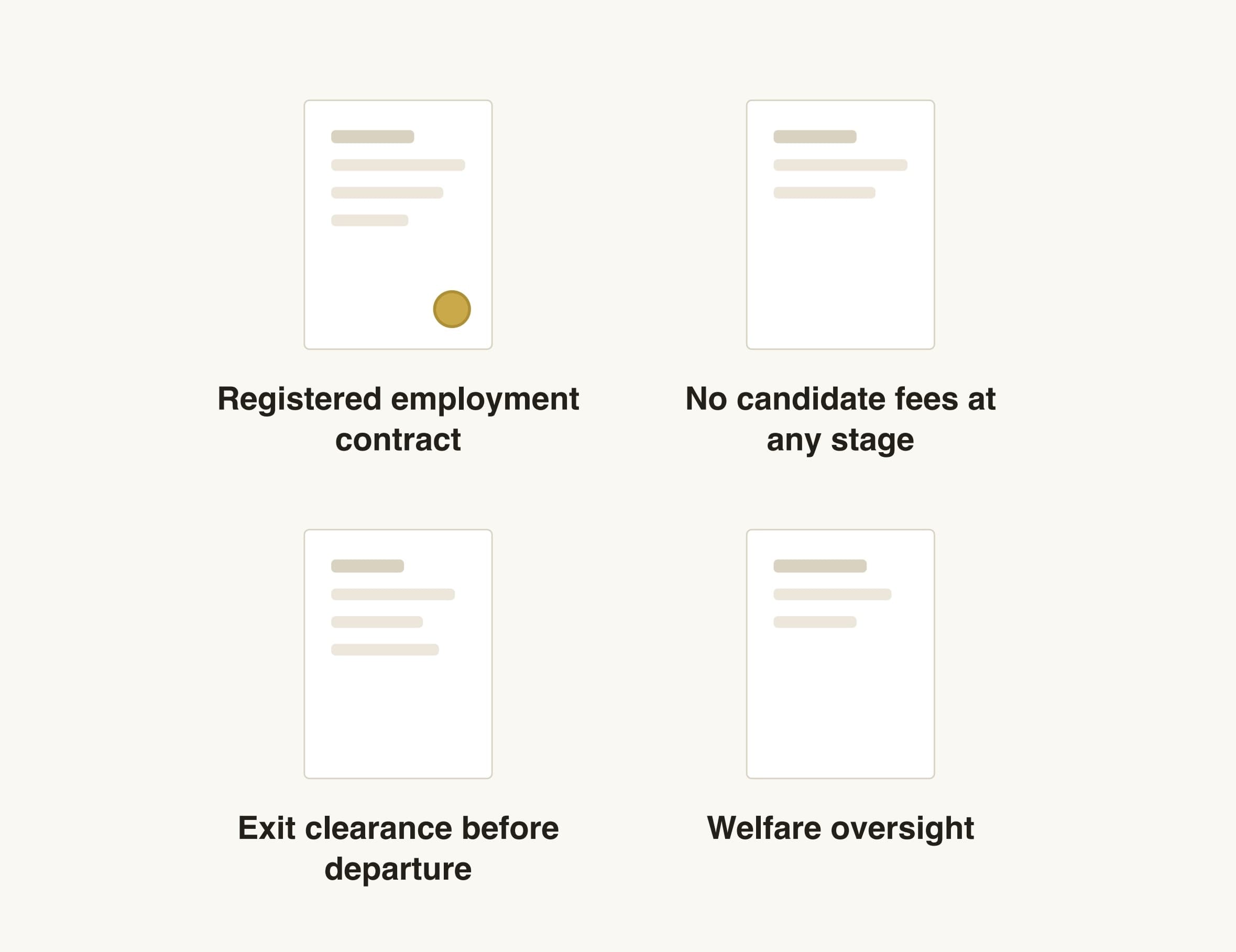
The DMW, created under Republic Act 11641 and replacing the former POEA, oversees every stage of overseas employment. The employment contract is government-reviewed and registered. The worker completes a mandatory pre-departure orientation. An Overseas Employment Certificate (OEC) is issued as the exit clearance. Without it, a Filipino worker cannot board a flight for overseas work. The framework is administered by the Philippine Department of Migrant Workers.
The framework also bans charging workers placement fees and extends protection while they are abroad through Philippine government offices in the destination country.
Who holds the recruitment licence
All overseas recruitment and deployment from the Philippines is DMW-licensed and runs under the DMW framework. BW manages sourcing, screening, and coordination, and you remain the direct employer and visa sponsor.
Why it protects you as the employer
A placement processed under the DMW framework is documented at each stage. The contract is government-registered, the credentials are verified, the worker arrives legally cleared, and no fees are charged to the candidate. A DMW-licensed agency must register contracts, secure exit clearances, and ensure workers pay no fees, giving you a documented, legal recruitment route.
That last point matters more each year. International recruitment codes and hospital reviews now ask two things: where you recruited staff, and whether workers paid to be placed. A DMW-processed placement answers both, which protects your facility in ethical recruitment audits.
What we handle under it
We process every placement through the framework: contract documentation, government clearances including the OEC, pre-departure requirements, and the work visa and immigration paperwork on the Philippine side. Your candidate leaves the Philippines legally cleared. You have one point of contact throughout. On your side, you interview, choose, employ directly, and sponsor the visa.
What documents you receive
You receive the government-registered employment contract, which you sign, and confirmation of the Philippine clearances including the OEC.
These sit alongside your own employment contract and visa records.

What it means for candidates
Candidates never pay fees, their contracts are government-reviewed before they sign, and they remain under Philippine protection abroad. That is the ethical standard and it is practical: compliant recruitment attracts stronger candidates and improves retention.
Common Questions About DMW-Licensed Healthcare Recruitment
The Department of Migrant Workers, the Philippine government body that regulates all overseas employment of Filipino workers. It was established under Republic Act 11641 and replaced the former POEA in 2022. Every Filipino healthcare worker taking a job abroad legally exits through its framework.
No. We handle the framework end to end: the contract registration, the clearances, and the pre-departure requirements. Your side is interviewing, choosing, employing the candidate directly, and sponsoring the visa.
The Overseas Employment Certificate, the exit clearance the DMW issues once the contract, medical, and orientation requirements are complete. Without it a Filipino worker cannot board a flight to take up a foreign job. It is the concrete document behind the phrase 'government clearances'.
Philippine law prohibits charging workers placement fees at any stage, and we hold to it absolutely. It is also the standard that protects your facility: worker-paid fees are the first thing an ethical-recruitment audit looks for.
A placement file that stands up to review: the verified credentials and DataFlow report, the government-registered employment contract, and confirmation of the exit clearance. If your facility runs recruitment audits or accreditation reviews, the paper trail is already in order.

Ready to Hire?
Questions about compliance?
Tell us your market and roles and we will explain what a compliant placement looks like for your facility.
UAE · Saudi Arabia · Qatar · Singapore